What does an ultrasound scan involve?
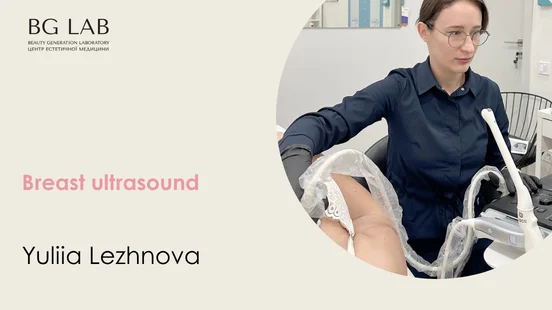
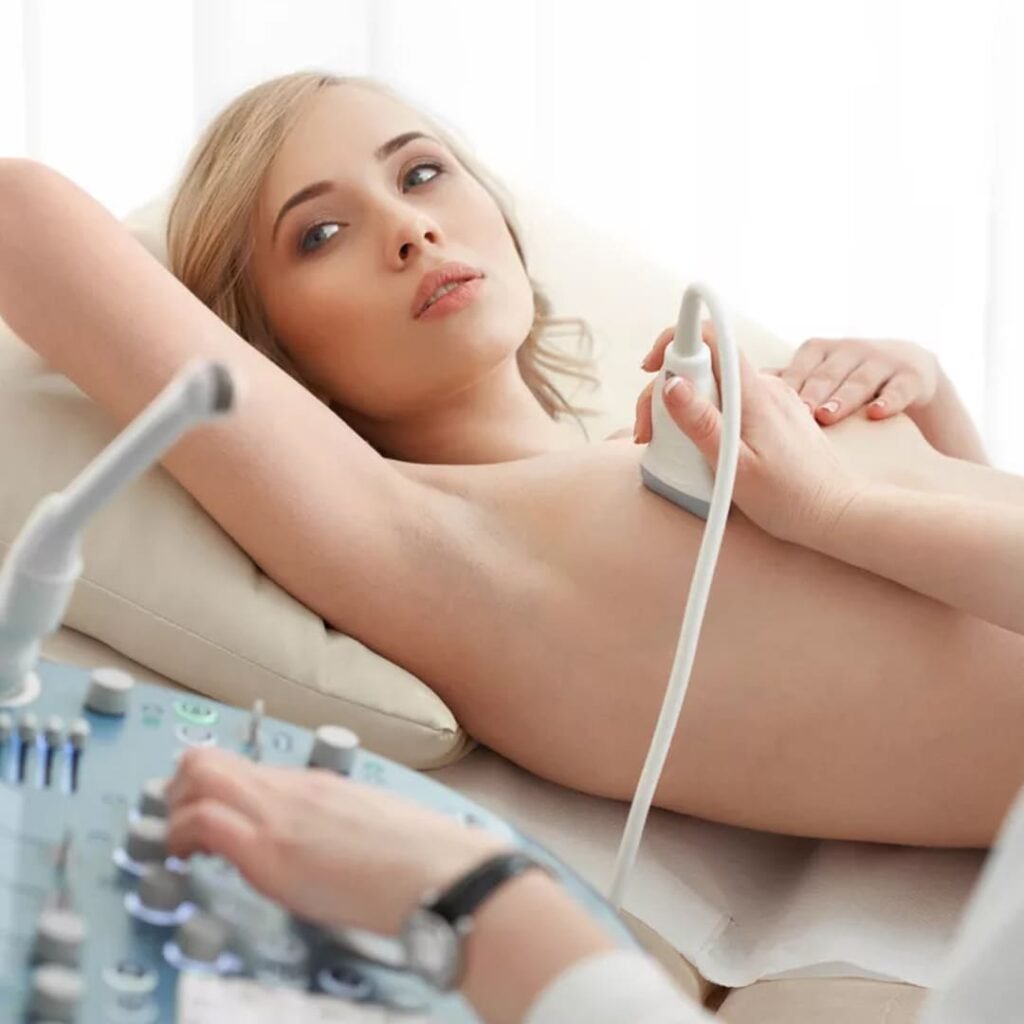
The patient lies on her back on a comfortable examination couch. Depending on the angle required to view the area being examined, the doctor may ask her to turn onto her side or sit up. A special gel is applied to the breast area to improve contact between the transducer and the skin, eliminating air pockets that could distort the ultrasound waves.
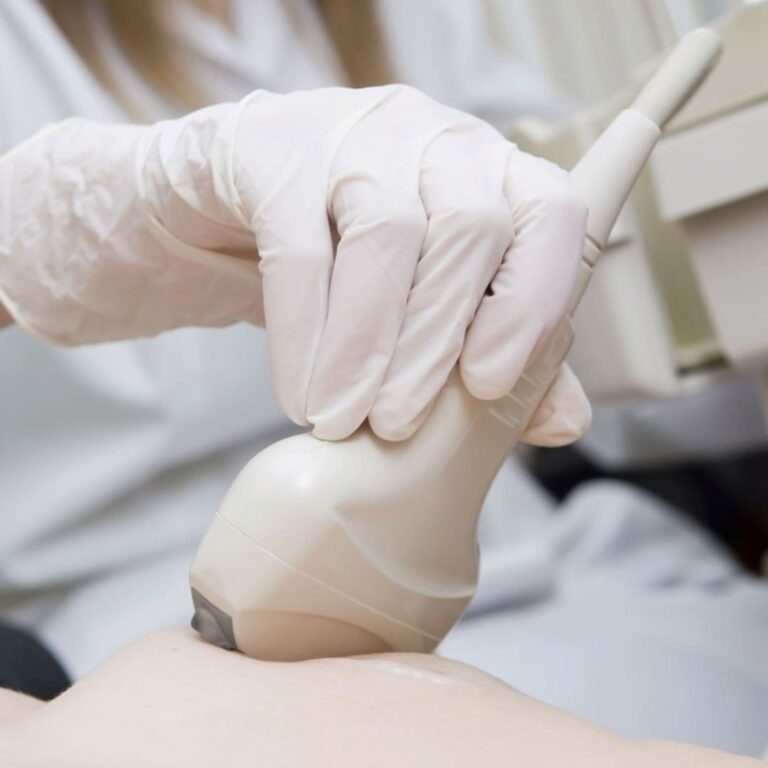
The doctor gently moves the probe across the breasts, obtaining images of the internal structures. The patient may feel slightly uncomfortable due to the pressure of the probe, but the procedure is not painful.
During the ultrasound scan, the doctor assesses the homogeneity of the tissue, the presence and nature of lumps, cysts, nodules and other abnormalities. The size and characteristics of any lesions found, as well as the condition of the lymph nodes and blood flow in the area of the lesions, are also assessed during the examination.
- The procedure takes 15–20 minutes
- The results are available immediately after the examination
How do I get the results?
You can receive the results of your breast ultrasound within 10–15 minutes of the examination being completed. These include:
images showing various structures and any possible changes
a detailed written report from the diagnostic radiologist, which includes:
a description of the homogeneity of breast tissue, and the presence and nature of any lumps, cysts, nodules and other structures;
the dimensions and characteristics of any lesions, if detected;
an assessment of the condition of the lymph nodes in the axillary region;
an assessment of blood flow in the area of the detected lesions (if a Doppler scan was performed rather than a standard scan);
an interpretation of the ultrasound findings, indicating possible pathologies and recommendations for further investigation or treatment.
If any abnormalities are detected, your doctor may recommend a mammogram, an MRI scan, a biopsy or a consultation with a breast specialist for a more thorough assessment and to determine the next steps in your treatment or monitoring.